INTERVIEW WITH NOORANN MATTIES
By Giselle Torres 10/12/2025
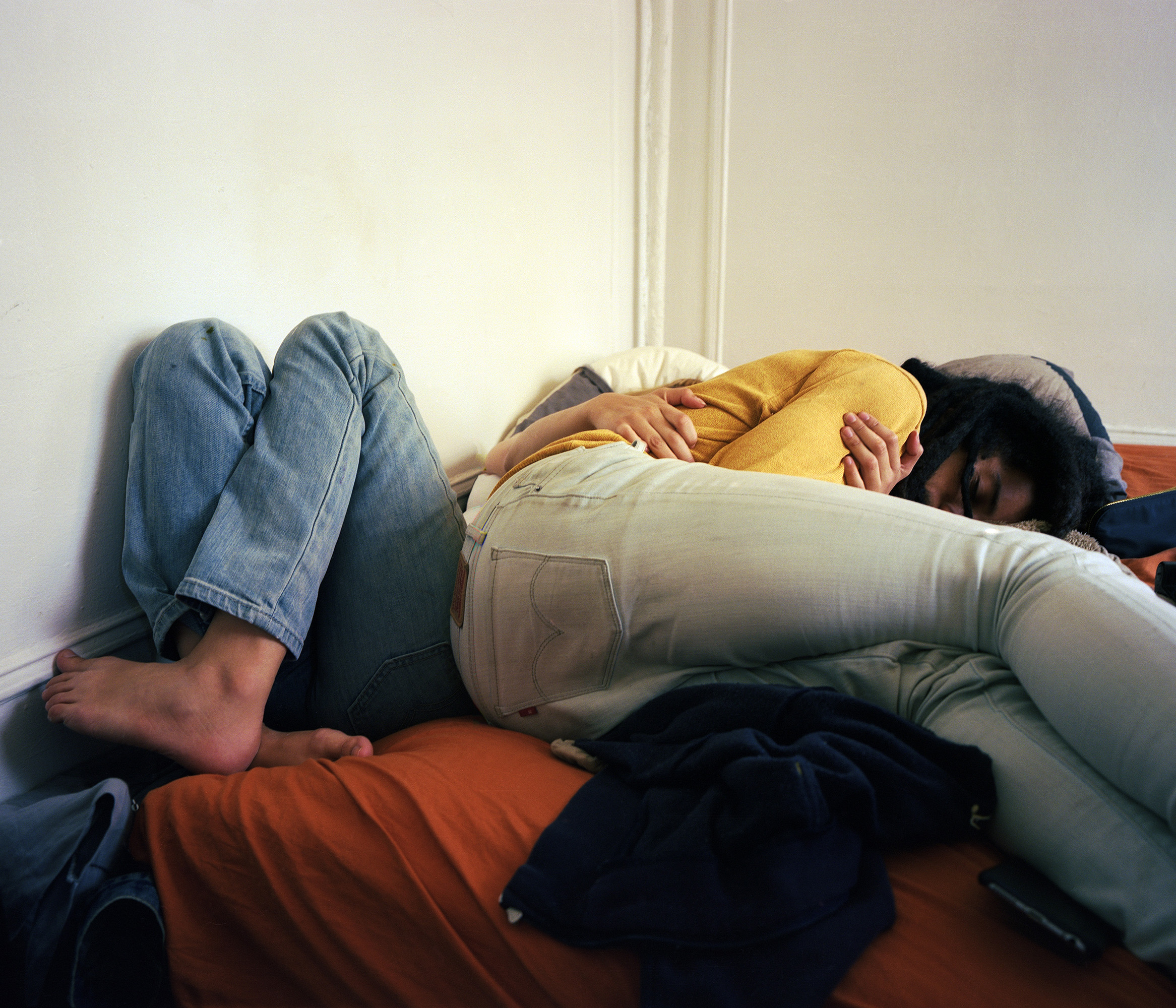
Noorann Matties is a multimedia artist based in Philadelphia, PA. Carrying the same film cameras since 2012, Matties has produced an ongoing pictorial diary that has informed her vibrant visual language. Her practice includes photographic bead curtains, an invented medium that highlights the disconnect between memory and the photographic image. In our conversation, we discussed tactile curiosity, her approach to world-building, and what it means to come of age in the era of the internet.
Noorann Matties is a multimedia artist based in Philadelphia, PA. Carrying the same film cameras since 2012, Matties has produced an ongoing pictorial diary that has informed her vibrant visual language. Her practice includes photographic bead curtains, an invented medium that highlights the disconnect between memory and the photographic image. In our conversation, we discussed tactile curiosity, her approach to world-building, and what it means to come of age in the era of the internet.
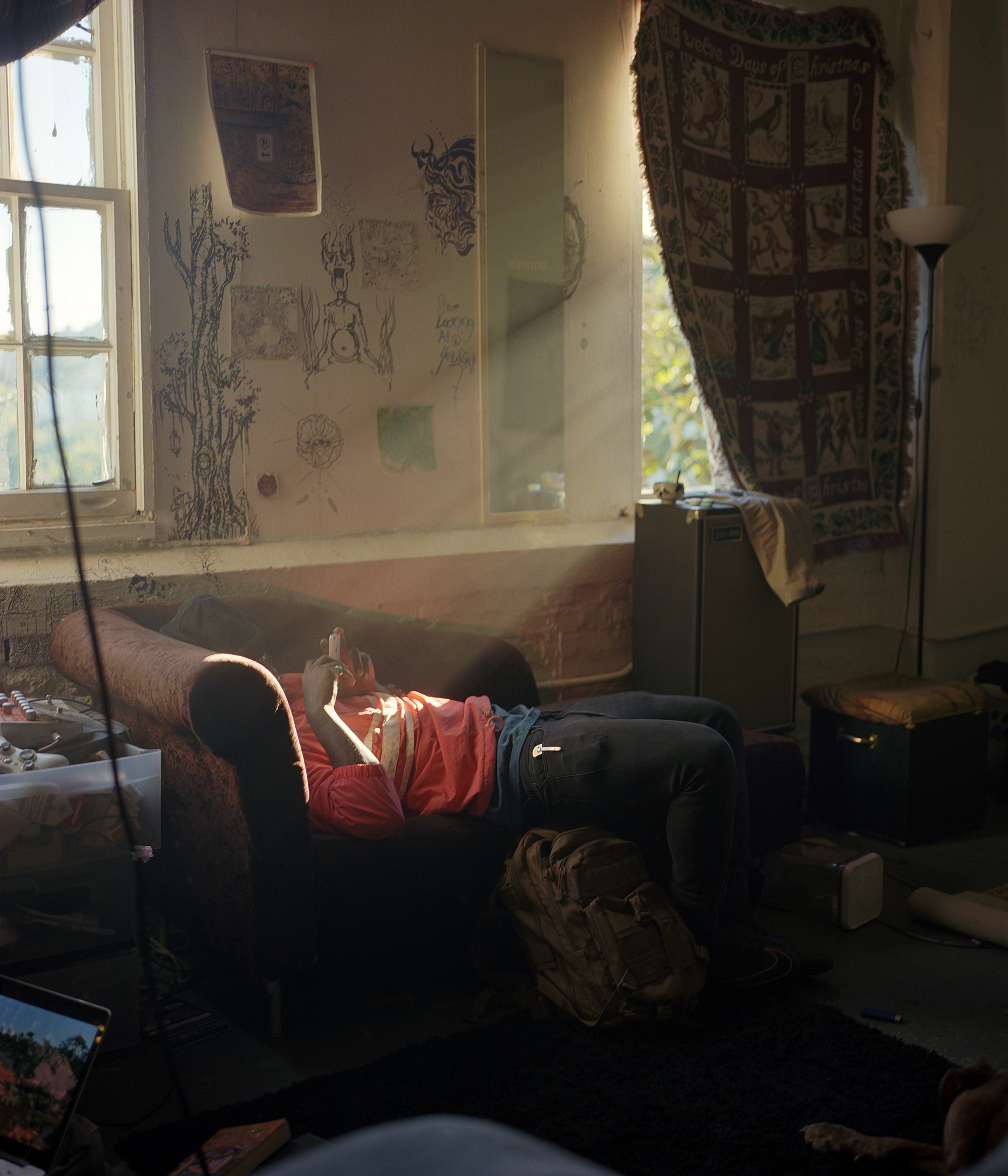
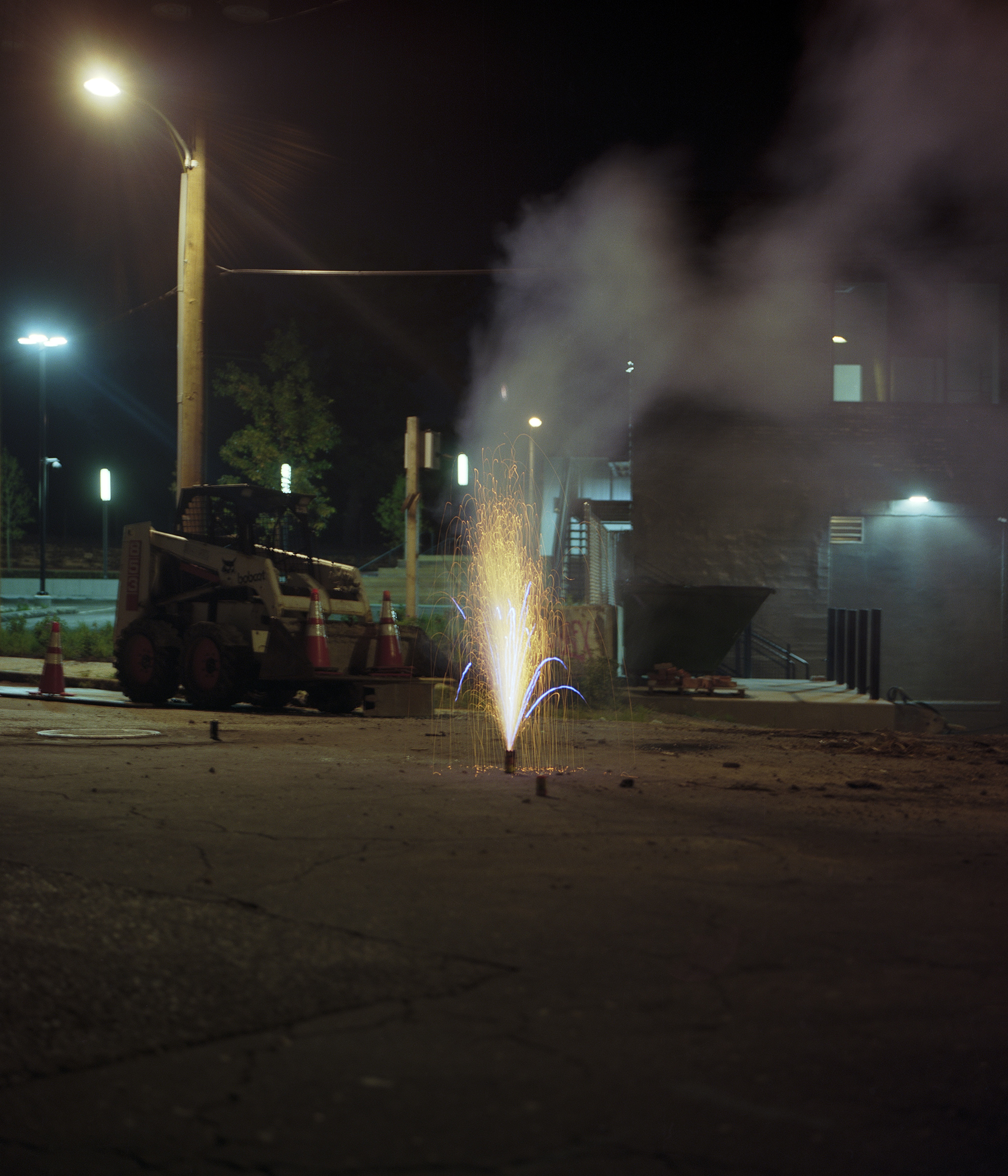
Giselle Torres: Through your film photographs, you have created a longstanding photo diary of your life since 2012. Viewing your images feels like glancing into intimate memories of yours. They feel so personal. Do you view them this way? How has your approach to film evolved over the years?
Noorann Matties: In a lot of ways I think my photo diary serves as a perfect metaphor for how I exist in the world. It is the result of both an unnamable innate spark and an immense amount of repetitive, analytical processing work. The project as a whole is probably the most personal thing I could endeavor to make, but my version of the work also includes hundreds of unseen images for every one that makes it into the sequenced, edited version I share online. The depth of what I share publicly has certainly changed over the years, largely as a reaction to growing up so visibly online, but my actual approach to taking photos has stayed incredibly constant.
The most impactful change I’ve made has been learning to surrender and become radically ambivalent to the outcome of the work. Not trying to steer my photos in any conscious direction and removing pressure and expectation from them has created a recognizable throughline of authenticity in the work. This also makes me much better at listening for the hike in my chest that happens in a moment I want to photograph. Taking a photo now at 31 feels, in my body and mind, exactly the same as taking one at 16 and selfishly that’s all that matters to me. I have shot the same film in the same cameras and processed them with the same scanners, programs, and methodologies for most of my life now. That process itself has been my absolute life preserver. Ultimately I’m lucky the images resonate with people, but the primary function of the work has been to ground myself and process experiences.
Noorann Matties: In a lot of ways I think my photo diary serves as a perfect metaphor for how I exist in the world. It is the result of both an unnamable innate spark and an immense amount of repetitive, analytical processing work. The project as a whole is probably the most personal thing I could endeavor to make, but my version of the work also includes hundreds of unseen images for every one that makes it into the sequenced, edited version I share online. The depth of what I share publicly has certainly changed over the years, largely as a reaction to growing up so visibly online, but my actual approach to taking photos has stayed incredibly constant.
The most impactful change I’ve made has been learning to surrender and become radically ambivalent to the outcome of the work. Not trying to steer my photos in any conscious direction and removing pressure and expectation from them has created a recognizable throughline of authenticity in the work. This also makes me much better at listening for the hike in my chest that happens in a moment I want to photograph. Taking a photo now at 31 feels, in my body and mind, exactly the same as taking one at 16 and selfishly that’s all that matters to me. I have shot the same film in the same cameras and processed them with the same scanners, programs, and methodologies for most of my life now. That process itself has been my absolute life preserver. Ultimately I’m lucky the images resonate with people, but the primary function of the work has been to ground myself and process experiences.
GT: How has film photography impacted the work you are currently making?
NM: I think the repetitive processes that anchor my photography practice did a really good job of showing me what making art needs to feel like for me. Personally, the only way I can reach anything that is activating and meaningful is through processes that themselves put me at ease. When the act of making something strips away outside noise and leaves me with a sense of “rightness” and flow, only then can I channel anything worthwhile. Film photography taught me how to recognize the on-ramps to what I’m truly fluent in. The understanding of myself and the world it’s brought me is hard to quantify, but present in all parts of my life.
NM: I think the repetitive processes that anchor my photography practice did a really good job of showing me what making art needs to feel like for me. Personally, the only way I can reach anything that is activating and meaningful is through processes that themselves put me at ease. When the act of making something strips away outside noise and leaves me with a sense of “rightness” and flow, only then can I channel anything worthwhile. Film photography taught me how to recognize the on-ramps to what I’m truly fluent in. The understanding of myself and the world it’s brought me is hard to quantify, but present in all parts of my life.
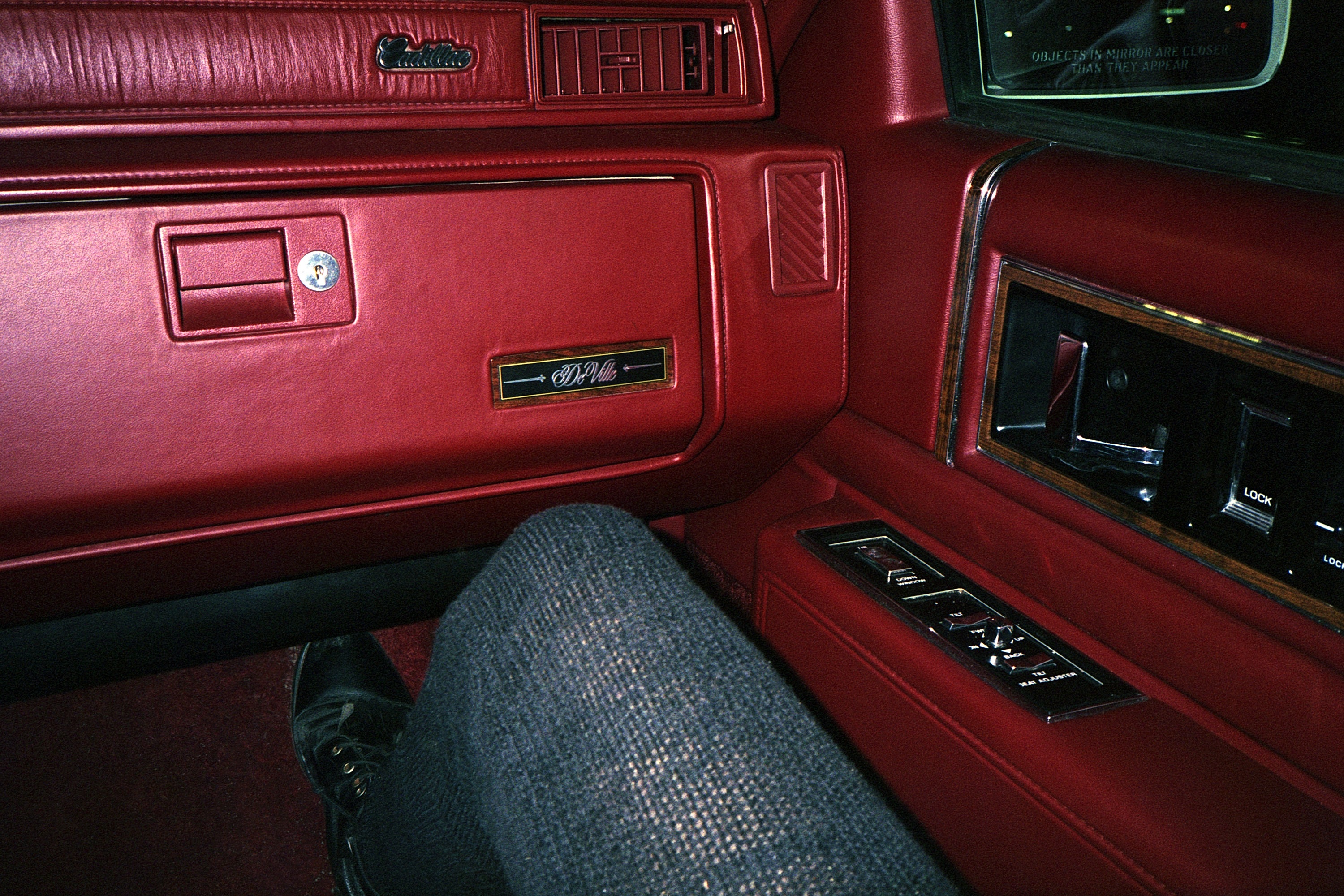
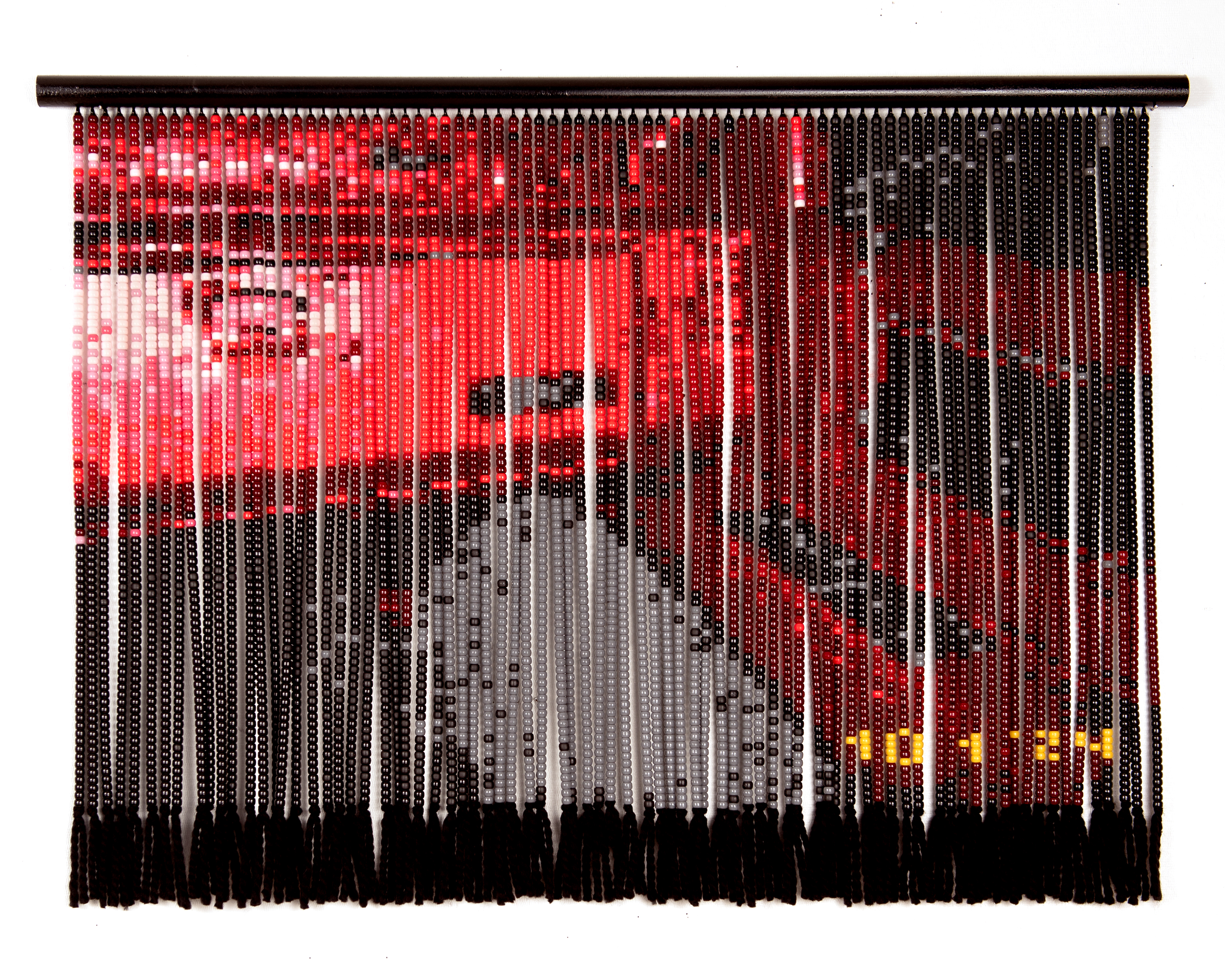
GT: Your photographic bead curtains translate some of your photographs into beaded curtains, a medium that is both tactile and ephemeral. What does the act of fragmenting and reassembling an image in this way allow you to explore that traditional photography might not?
NM: Due to natural assumptions from the viewer and my increasingly hands-off approach to what I photograph I’ve felt less and less control over the narrative written through my photos over the years. In a lot of ways I feel my beaded work is a reaction to the ways my photos are received by others. My photo diary can be characterized by fleeting, vibrant snapshot moments, but I actually struggle to recall the details and emotions present in the vast majority of moments I’ve photographed.
A couple of years after I started keeping my photo diary I underwent electroconvulsive therapy in an attempt to alleviate severe depression. One of the main side effects of the treatment is memory loss and I found myself in this position where I had this extremely personal, systematic archive of the last few years of my life, but very few concrete memories of it. That period of time really cemented how important taking photos was for me, but also highlighted this disconnect between photography as a medium and my lived experience. While my memory has improved in the years since that experience it’s certainly remained a challenge for me. The abstraction, movement, and transparency that my beaded photos take on is far more accurate to how I experience those moments and anchors them more firmly in my reality.
NM: Due to natural assumptions from the viewer and my increasingly hands-off approach to what I photograph I’ve felt less and less control over the narrative written through my photos over the years. In a lot of ways I feel my beaded work is a reaction to the ways my photos are received by others. My photo diary can be characterized by fleeting, vibrant snapshot moments, but I actually struggle to recall the details and emotions present in the vast majority of moments I’ve photographed.
A couple of years after I started keeping my photo diary I underwent electroconvulsive therapy in an attempt to alleviate severe depression. One of the main side effects of the treatment is memory loss and I found myself in this position where I had this extremely personal, systematic archive of the last few years of my life, but very few concrete memories of it. That period of time really cemented how important taking photos was for me, but also highlighted this disconnect between photography as a medium and my lived experience. While my memory has improved in the years since that experience it’s certainly remained a challenge for me. The abstraction, movement, and transparency that my beaded photos take on is far more accurate to how I experience those moments and anchors them more firmly in my reality.
GT: Thank you for sharing this experience and how photos where a safe place to turn to when navigating that process. An aspect of your work which has stayed consistent in your practice in vibrant colors. What is it about vibrancy stat still serves you? For example, in these curtains, you’re not just recreating the image you are referencing, but generating a kind of movement and energy which shifts as viewers move around them. How do you think about color as both a structural and emotional element in your work? Does the vibrancy serve to amplify the photograph’s original mood, or do you see it transform into something entirely new?
NM: I feel drawn to the rich saturated colors present in my work for largely the same reason I’ve landed on everything else, they feel good to me. The vibrant colors I’m drawn to in my photographs also helped create the bridge to beading them because the colors were easier to match to available shades of pony bead which are manufactured for kids crafts. Vibrant colors can invoke a sense of nostalgia for a lot of people, but when my beaded pieces are layered against each other they become overwhelming and muddy. For me that representation feels much more in line with how I experience nostalgia, it is as comforting as it is overwhelming.
![]()
NM: I feel drawn to the rich saturated colors present in my work for largely the same reason I’ve landed on everything else, they feel good to me. The vibrant colors I’m drawn to in my photographs also helped create the bridge to beading them because the colors were easier to match to available shades of pony bead which are manufactured for kids crafts. Vibrant colors can invoke a sense of nostalgia for a lot of people, but when my beaded pieces are layered against each other they become overwhelming and muddy. For me that representation feels much more in line with how I experience nostalgia, it is as comforting as it is overwhelming.
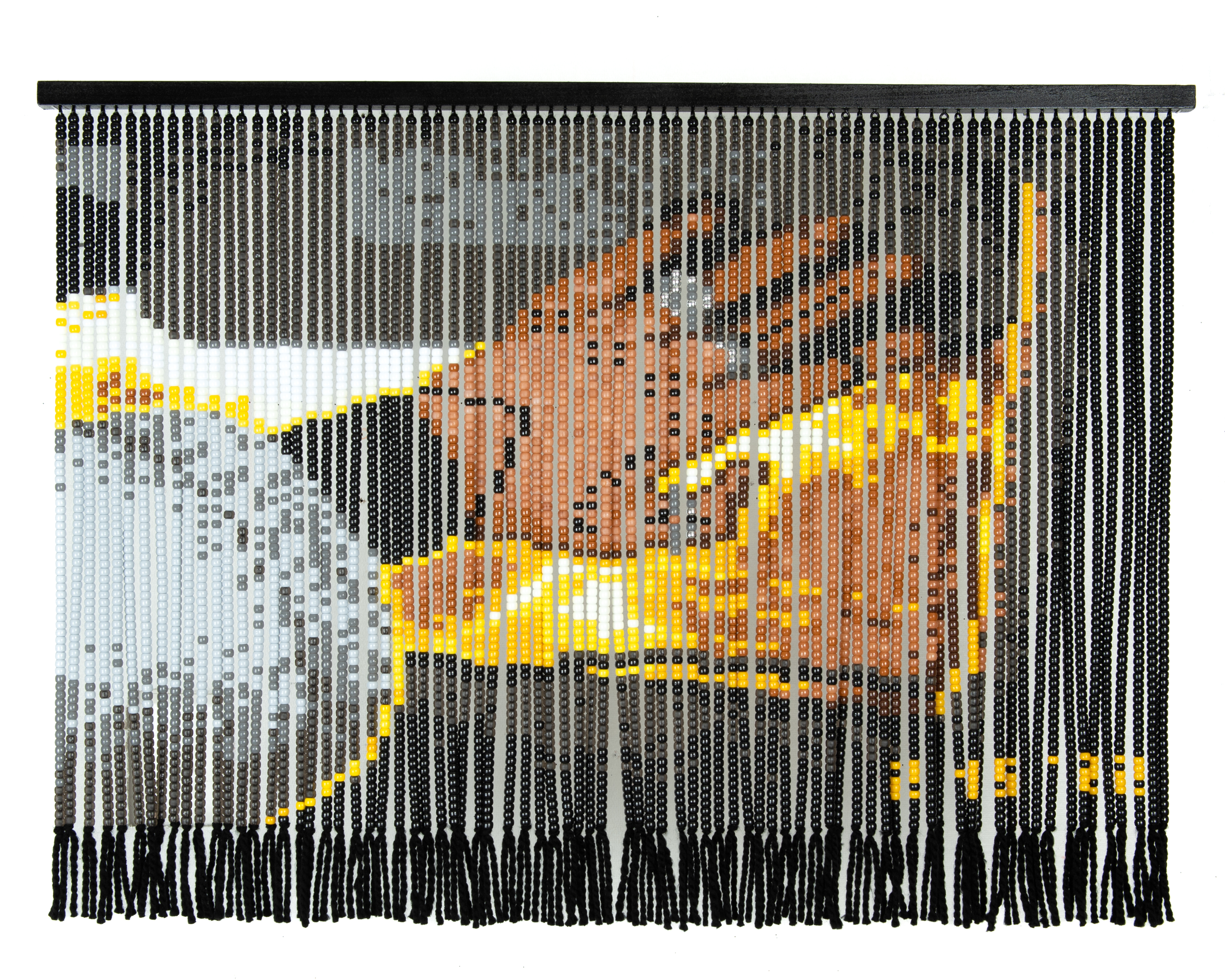
GT: The bead curtains and your mixed media work are so thrilling because of their responsiveness to us, the viewers, and the space they inhabit. From the distinctive textures, sounds of beads rubbing against one another as someone passes by, the recognition of the imagery, to its demanding presence in space. How do you intend for people to interact with your three-dimensional work?
NM: When I first started beading my photos in this manner I didn’t actually intend for the viewer to be tactilely interacting with them, but I pretty quickly realized that was limiting and perfectionistic. I’m initially very focused on the legibility of the image and making sure it will translate well in beads, and it was hard to envision the pieces being continually mussed and disrupted in their final form. Ultimately I think my lack of intentionality around this at the outset and the sense of tactile curiosity the medium inherently has is actually really interesting and a good metaphor for both translated memory and how I view my images vs how they are received. I can make an image as accurate as it feels to me right now, but I ultimately have no control over how someone is going to interact with or interpret it. I think that’s definitely part of a bigger lesson my work has been trying to teach me these last few years.
GT: Your art is rich with items from our world and at the same time can transport us to virtual reality. Looking at your illustrative work in particular, I want to ask you about what the term world-building means to you. How is your own personal mythology present in your work?
NM: For better or worse, I’m a pretty insular person. I’m most at ease in my interior fantasy world and it can be easy for me to lose footing in reality. I think anyone that grew up on the internet who grapples with being understood by or understanding others recognizes the refuge that online worlds represent. Growing up in the golden age of blogging let you express yourself with a uniquely curated control that weighted your idea of yourself over all else, and that sense of agency was very formative for me. No one is ever going to be able to see out of my front window and I’ll never see out of theirs. Gathering the confluence of factors I feel define my reality and laying them out in a way that aims to explain something to the outside world feels like bridging a gap between myself and others. World-building for me is more rooted in reality than anything else.
NM: When I first started beading my photos in this manner I didn’t actually intend for the viewer to be tactilely interacting with them, but I pretty quickly realized that was limiting and perfectionistic. I’m initially very focused on the legibility of the image and making sure it will translate well in beads, and it was hard to envision the pieces being continually mussed and disrupted in their final form. Ultimately I think my lack of intentionality around this at the outset and the sense of tactile curiosity the medium inherently has is actually really interesting and a good metaphor for both translated memory and how I view my images vs how they are received. I can make an image as accurate as it feels to me right now, but I ultimately have no control over how someone is going to interact with or interpret it. I think that’s definitely part of a bigger lesson my work has been trying to teach me these last few years.
GT: Your art is rich with items from our world and at the same time can transport us to virtual reality. Looking at your illustrative work in particular, I want to ask you about what the term world-building means to you. How is your own personal mythology present in your work?
NM: For better or worse, I’m a pretty insular person. I’m most at ease in my interior fantasy world and it can be easy for me to lose footing in reality. I think anyone that grew up on the internet who grapples with being understood by or understanding others recognizes the refuge that online worlds represent. Growing up in the golden age of blogging let you express yourself with a uniquely curated control that weighted your idea of yourself over all else, and that sense of agency was very formative for me. No one is ever going to be able to see out of my front window and I’ll never see out of theirs. Gathering the confluence of factors I feel define my reality and laying them out in a way that aims to explain something to the outside world feels like bridging a gap between myself and others. World-building for me is more rooted in reality than anything else.
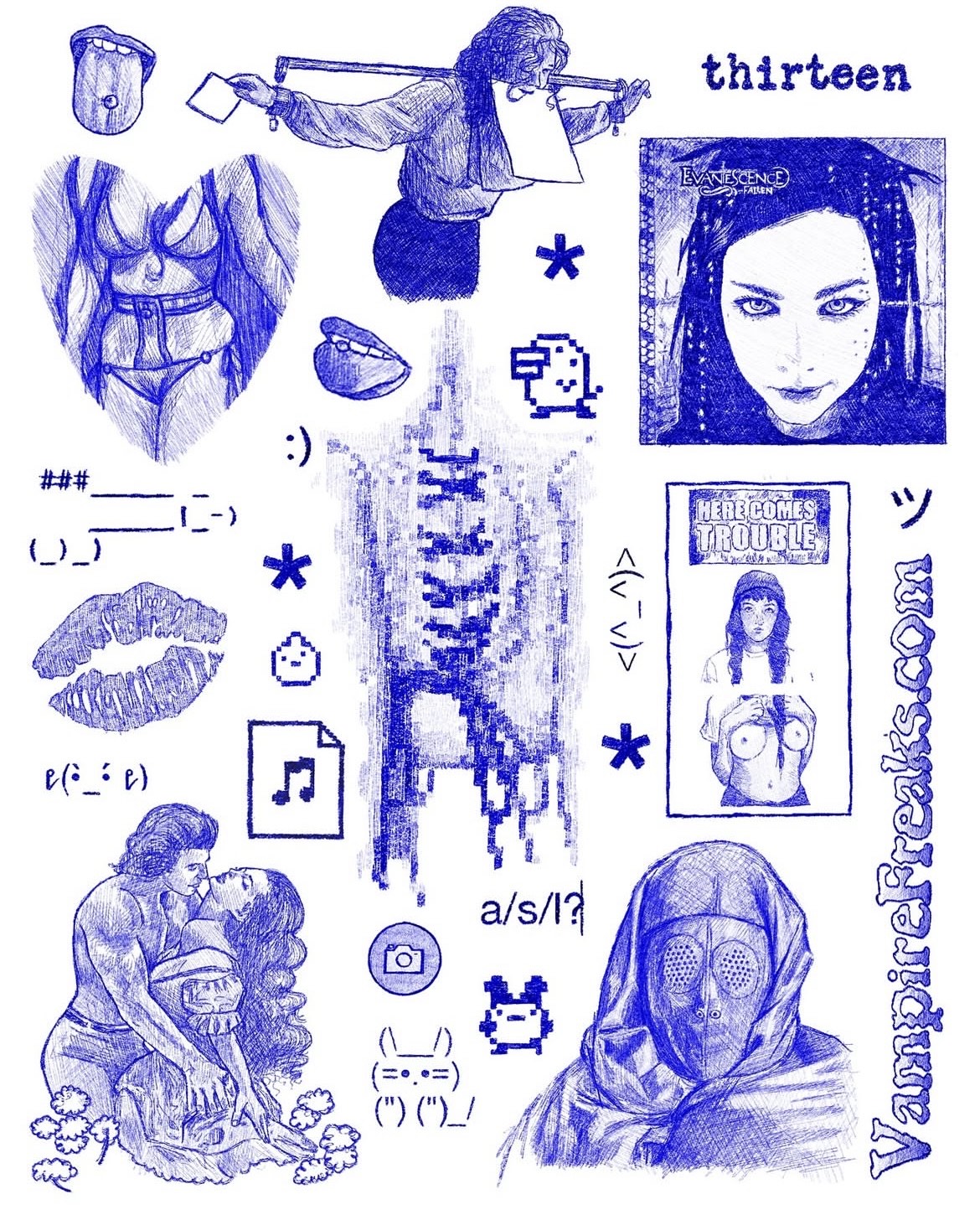
GT: Your ballpoint pen illustrations reference early 2010s online culture, vulnerability, and power. What specific platforms, aesthetics, or subcultures influenced you the most when making these?
NM: Like a lot of my peers I grew up with pretty unrestricted access to the internet at a time where the point of being online was what you were into. It’s hard for me to point to any major aspect of my life that doesn’t originate from Tumblr, Gaia Online, Body Modification EZine, FanFiction.net, or various niche interest forums. The feeling of an entirely new world cracking open as you stumble upon a subject that excites you and its yet unexplored online community is something that’s hard to replicate now. At the same time there’s a lot of hindsight that kicks in around online safety and how we’re taught to treat people. Exploring themes of power, control, and sexuality in the context of online nostalgia is a way of reexperiencing that.
NM: Like a lot of my peers I grew up with pretty unrestricted access to the internet at a time where the point of being online was what you were into. It’s hard for me to point to any major aspect of my life that doesn’t originate from Tumblr, Gaia Online, Body Modification EZine, FanFiction.net, or various niche interest forums. The feeling of an entirely new world cracking open as you stumble upon a subject that excites you and its yet unexplored online community is something that’s hard to replicate now. At the same time there’s a lot of hindsight that kicks in around online safety and how we’re taught to treat people. Exploring themes of power, control, and sexuality in the context of online nostalgia is a way of reexperiencing that.
GT: How does time behave for you when you’re working on pieces that require a lot of time and effort to bring to life? What is your relationship with flow state?
NM: I would say flow state is realistically my largest motivator. I’m not sure I’d be doing any of this if making art wasn’t the most direct path for me to experiencing flow. Half the work of making my beaded pieces is planning and prep so by the time I actually sit down to bead it can often feel like playing catch-up on old ideas just as new ones start popping up. That frustration goes out the door as soon as I get into a groove and everything else quiets down. My practice is always teaching me things. The most impactful lesson I’ve really internalized since starting my beaded work is what motivation and reassurance actually look like to me. The desire that comes from a source I’m not conscious of when I know I want to take a photo is something I’ve learned to trust implicitly and search for in other areas of my life because it’s proven over and over to be the most direct path to where I need to be. Flow state is intrinsically tied up with that desire for me because it affirms that I need to keep going, that where I’m headed is worthwhile.
GT: You are currently exhibiting at Gotham Bowery in New York. What has this experience been like for you?
NM: Showing work with Gotham has been great. This was the first time I’ve been able to display my beaded work layered as I envisioned them in and having the space and freedom to realize that really elevated the work for me. The lenticular effect of the pieces as you move back and forth through them in the space feels closer to how I experience the memories associated with the photos themselves than anything I’ve been able to create before. I poured six months of myself into creating this body of work and the photos I chose resonated more and more as my life changed throughout the process. It was a real labor of love and so informative for me to move through.
GT: This has been a pleasure, Noorann. Thank you!
NM: Thank you! It was a real pleasure to get to flesh out in words so many of these themes that float around in my head all day. Thank you so much for taking this time with me and my work.
NM: I would say flow state is realistically my largest motivator. I’m not sure I’d be doing any of this if making art wasn’t the most direct path for me to experiencing flow. Half the work of making my beaded pieces is planning and prep so by the time I actually sit down to bead it can often feel like playing catch-up on old ideas just as new ones start popping up. That frustration goes out the door as soon as I get into a groove and everything else quiets down. My practice is always teaching me things. The most impactful lesson I’ve really internalized since starting my beaded work is what motivation and reassurance actually look like to me. The desire that comes from a source I’m not conscious of when I know I want to take a photo is something I’ve learned to trust implicitly and search for in other areas of my life because it’s proven over and over to be the most direct path to where I need to be. Flow state is intrinsically tied up with that desire for me because it affirms that I need to keep going, that where I’m headed is worthwhile.
GT: You are currently exhibiting at Gotham Bowery in New York. What has this experience been like for you?
NM: Showing work with Gotham has been great. This was the first time I’ve been able to display my beaded work layered as I envisioned them in and having the space and freedom to realize that really elevated the work for me. The lenticular effect of the pieces as you move back and forth through them in the space feels closer to how I experience the memories associated with the photos themselves than anything I’ve been able to create before. I poured six months of myself into creating this body of work and the photos I chose resonated more and more as my life changed throughout the process. It was a real labor of love and so informative for me to move through.
GT: This has been a pleasure, Noorann. Thank you!
NM: Thank you! It was a real pleasure to get to flesh out in words so many of these themes that float around in my head all day. Thank you so much for taking this time with me and my work.